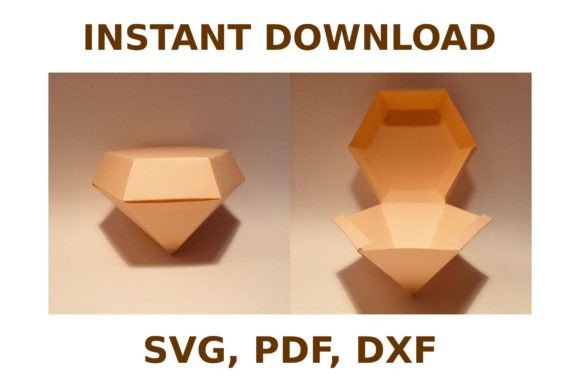
Diamond Box Template: A Practical Guide for Precision Packaging
In the world of custom packaging and handmade gifts, structural integrity is just as important as aesthetic appeal. Whether you are a small business owner shipping artisanal products or a hobbyist creating bespoke party favors, the difference between a professional finish and a amateurish result often lies in the precision of the cut lines and fold scores. This is where a well-engineered Diamond Box Template becomes an indispensable asset. Unlike standard rectangular containers, diamond-shaped boxes offer a unique geometric elegance that stands out on shelves and in unboxing experiences. However, achieving this shape manually is notoriously difficult without precise guides.
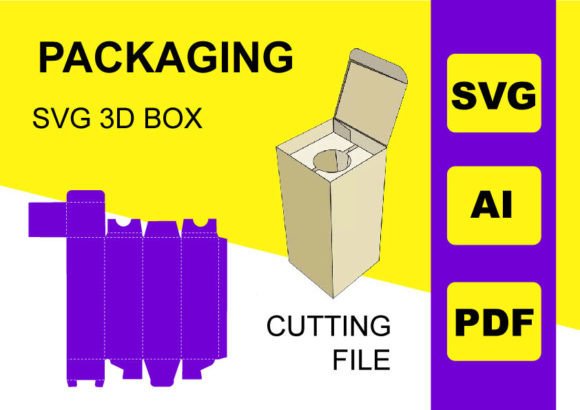
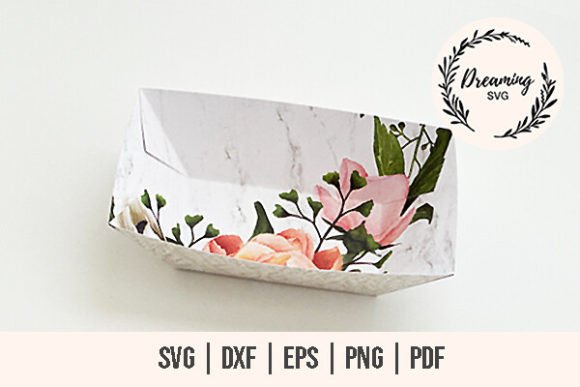
The digital assets available for these structures typically come packaged as a comprehensive ZIP archive containing SVG, DXF, and PDF files. This multi-format approach ensures compatibility across a wide range of cutting machines and manual crafting methods. For professionals and serious creators, understanding the nuances of these file types and how they interact with materials like cardstock or kraft paper is essential for consistent, high-quality results.
Understanding the File Formats and Compatibility
The versatility of a Diamond Box Template is largely defined by the file formats included in the download. Most high-quality templates provide three distinct types: SVG, DXF, and PDF. Each serves a specific purpose in the workflow of modern crafters and manufacturers.
- SVG (Scalable Vector Graphics): This is the preferred format for users of Silhouette Studio and other vector-based design software. SVGs retain their quality at any size, allowing for seamless scaling without pixelation. They are particularly useful for those who wish to modify the design elements, such as adding logos or decorative cutouts, before sending the file to the cutter.
- DXF (Drawing Exchange Format): Originally developed for CAD software, DXF files are widely supported by Cricut Design Space and various industrial cutting plotters. If you are using a Cricut machine, this format often provides the most reliable interpretation of cut lines and score lines, minimizing the risk of software errors during the import process.
- PDF (Portable Document Format): Not everyone owns a digital cutting machine. The inclusion of PDF files ensures that the template remains accessible for manual crafting. These files can be printed directly onto standard paper sizes, allowing users to cut and score by hand using a craft knife and ruler. This is particularly valuable for educators or occasional crafters who do not require high-volume production.
Compatibility with major platforms like Silhouette and Cricut is a baseline expectation, but the true test of a template’s quality is how cleanly the lines translate across these different ecosystems. A robust Diamond Box Template should have clearly distinguished layers for cutting versus scoring, preventing the common frustration of having to manually separate lines within the software.
Precision and Structural Integrity
The primary advantage of using a pre-tested digital template over designing one from scratch is the assurance of geometric accuracy. Diamond boxes rely on symmetrical angles to close properly. If even one flap is misaligned by a fraction of a millimeter, the box may not close flush, or worse, it may burst open under the weight of its contents.
High-quality templates undergo rigorous testing to ensure that the tab lengths, slot widths, and fold angles are optimized for standard paper weights. When a template is described as "tested for quality," it implies that the designer has accounted for the kerf (the width of the cut made by the blade) and the thickness of the material. This attention to detail is crucial for maintaining the structural integrity of the final product. For entrepreneurs, this reliability translates to reduced waste. Instead of ruining multiple sheets of expensive branded paper on failed prototypes, users can achieve a near-perfect result on the first attempt.
Furthermore, the measurements of these templates are often dependent on the paper size used. This scalability is a double-edged sword. On one hand, it allows for customization; on the other, it requires the user to understand the limitations of their material. For instance, scaling a template up significantly may require heavier cardstock to maintain rigidity, while scaling it down might necessitate thinner paper to allow for tight folds without cracking. Understanding this relationship between scale and material strength is key to effective usage.
Practical Applications and User Benefits
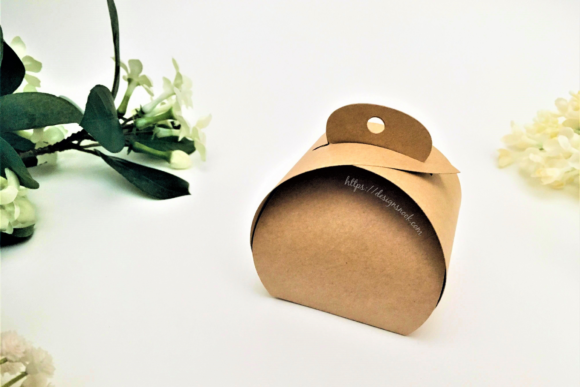
Who benefits most from a Diamond Box Template? The audience is broad, ranging from corporate marketers to individual artisans. For small business owners, particularly those in the jewelry, cosmetics, or confectionery sectors, packaging is a silent salesman. A diamond-shaped box conveys luxury and thoughtfulness. It breaks the monotony of standard rectangular shipping boxes, creating a memorable unboxing experience that customers are more likely to share on social media.
For event planners and wedding coordinators, these templates offer a cost-effective solution for favors. Instead of purchasing pre-made boxes at a premium, creators can buy bulk cardstock in specific color schemes and produce hundreds of uniform boxes at a fraction of the cost. The ability to customize the size means that whether you are packaging a single macaron or a set of earrings, the fit can be tailored precisely.
Educators also find value in these resources. Teaching geometry and spatial reasoning through tangible projects is highly effective. A diamond box template provides a real-world application of angular mathematics, allowing students to see how two-dimensional shapes transform into three-dimensional objects. The PDF format is particularly useful in classroom settings where digital cutters may not be available for every student.
Workflow Efficiency and Long-Term Value
From a workflow perspective, integrating a reliable Diamond Box Template into your design library saves significant time. Creating a structurally sound 3D box from scratch in vector software requires a deep understanding of net diagrams and fold mechanics. By utilizing a pre-engineered template, creators can bypass the technical drafting phase and focus on branding and decoration.
The long-term value of these templates lies in their reusability. Once you have determined the optimal settings for your specific cutting machine and paper type—such as blade depth, pressure, and speed—you can replicate the process indefinitely. This consistency is vital for businesses that need to maintain brand standards across large batches of packaging. Moreover, because the files are digital, they do not degrade over time. Unlike physical die-cuts which can dull or bend, digital templates remain perfect regardless of how many times they are used.
However, users should be aware of certain limitations. While the templates are compatible with most home cutting machines, they are not designed for industrial offset printing or heavy-duty corrugated cardboard without modification. The complexity of the diamond shape means that assembly can be more time-consuming than simple tuck-end boxes. For high-volume automated packing lines, a simpler structure might still be preferable. But for hand-assembled, premium products, the trade-off in assembly time is worth the aesthetic payoff.
Making the Right Choice for Your Project
When evaluating whether a Diamond Box Template fits your needs, consider the end goal of your project. If you are looking for speed and simplicity, a standard cube might suffice. But if differentiation and perceived value are your priorities, the diamond shape offers a compelling alternative. Ensure that your chosen template includes the necessary file formats for your equipment. If you use a Cricut, verify that the DXF files are clean and layered correctly. If you prefer Silhouette, check that the SVG groups are logical and easy to edit.
Additionally, pay attention to the instructions provided with the ZIP archive. Good templates often include a readme file or a visual guide indicating which lines are for cutting and which are for scoring. Ignoring these distinctions is the most common cause of assembly failure. Take the time to perform a test run with scrap paper before committing to your final material. This small step can save both money and frustration.
In conclusion, a well-designed Diamond Box Template is more than just a digital file; it is a tool that bridges the gap between creative vision and physical reality. By providing precision, compatibility, and structural reliability, these templates empower creators to produce professional-grade packaging with confidence. Whether you are scaling a small business or crafting a personal gift, the right template allows you to focus on the artistry rather than the engineering, delivering a final product that reflects care, quality, and attention to detail.