Bringing the Macabre to Life: The Skull Dripping Blood 3D Model
There is a distinct thrill in holding a physical object that captures the essence of horror. While digital art can be stunning, there is something undeniably powerful about a tangible piece that sits on your shelf, casting shadows and demanding attention. This is exactly what the Skull Dripping Blood 3D model offers. It is not just another generic skeleton print; it is a stylized representation of darkness, designed to evoke a dramatic atmosphere while remaining accessible to makers of all skill levels.
In the world of additive manufacturing, finding a balance between high-impact aesthetics and printability can often feel like walking a tightrope. Many intricate designs look incredible on a screen but turn into a tangled mess of filament on the build plate. However, this specific design bridges that gap perfectly. By combining a dark, gothic style with well-defined shapes and a simplified surface geometry, it ensures a stable printing experience even for those who are just starting their journey in 3D printing. The result is a piece that looks professional and intense without requiring an engineering degree to successfully produce.
The Art of Stylized Horror
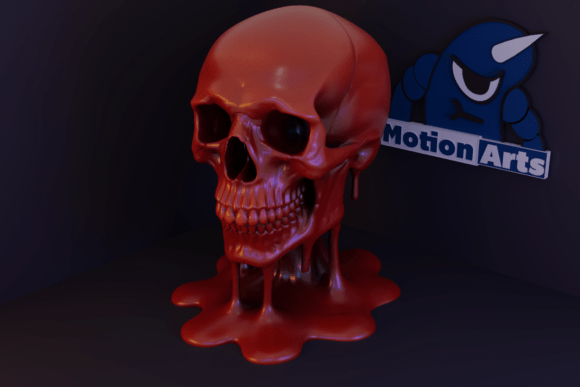
The visual appeal of the Skull Dripping Blood lies in its deliberate stylistic choices. Unlike hyper-realistic anatomical models that strive for medical accuracy, this design embraces a more artistic, almost graphic novel-like aesthetic. The blood effect is not merely an afterthought; it is integrated into the form of the skull itself, creating flowing lines that guide the eye downward and add a sense of motion to a static object. This "dripping" element transforms a standard cranium into a narrative piece, suggesting a story of conflict, sacrifice, or supernatural events.
For collectors of horror memorabilia, this distinction is crucial. A realistic skull might fit in a science classroom, but a skull with stylized, thick rivulets of blood belongs in a gamer's setup, a Halloween display, or a macabre diorama. The simplified surfaces mentioned in the design specs are not a limitation but a feature. They allow for better light interaction when painted, making highlights and shadows pop more effectively than they would on a noisy, overly detailed mesh. This makes the model ideal for those who enjoy customizing their prints with washes, dry brushing, or airbrushing techniques to enhance the terrifying touch it brings to any room.
Why Beginners Should Start Here
One of the most significant barriers for newcomers to 3D printing is the fear of failure. Complex overhangs, tiny details that fail to adhere, and warping bases can quickly turn a hobby into a frustration. The Skull Dripping Blood model addresses these pain points head-on. It is explicitly categorized as a Beginner Level project, and for good reason.
The geometry has been optimized to minimize risky overhangs. While the prompt notes that supports are required—a common necessity for any model featuring dripping elements—the support structures for this design are generally easy to remove without damaging the underlying surface. The "well-defined shapes" ensure that the printer head has clear paths to travel, reducing the likelihood of stringing or layer shifting. For a novice, successfully printing a model that looks this impactful provides a massive confidence boost. It proves that you can create complex-looking art without needing an industrial-grade machine or months of trial and error.
Furthermore, the file format provided is STL, the universal language of 3D printing. This ensures compatibility with virtually every slicer software on the market, from Cura and PrusaSlicer to Lychee for resin users. Whether you are running a fused deposition modeling (FDM) printer with PLA or PETG, or a stereolithography (SLA) resin printer for smoother finishes, this model adapts well to your workflow.
Integrating Dark Atmosphere into Modern Decor
Gone are the days when alternative decor was relegated to the basement or hidden away during family gatherings. Today, "dark academia," gothic revival, and horror-themed aesthetics are mainstream interior design trends. People are actively seeking ways to express their unique personalities through their living spaces, and a Skull Dripping Blood serves as a perfect focal point.
Consider the modern gaming station or streaming setup. Lighting plays a huge role in these environments, often utilizing RGB strips to set the mood. Placing a printed skull with a matte black finish and red accents near a colored light source can create eerie, dynamic reflections that change the entire vibe of the room. Similarly, for tabletop role-playing game (TTRPG) enthusiasts, this model is a goldmine. Dungeon Masters constantly need props to set the scene for their players. Placing this skull on the table as a centerpiece for a necromancer's lair or a cursed temple instantly immerses players in the story. It moves beyond a simple token; it becomes a storytelling device.
For those involved in stop-motion animation or indie filmmaking, having a library of practical effects props is essential. While CGI is prevalent, practical models often provide a texture and weight that computers struggle to replicate perfectly. A physical Skull Dripping Blood can be lit, filmed, and manipulated in real-time, adding a gritty realism to short films or music videos.
Material Choices and Finishing Techniques
To truly make this model stand out, the choice of material and post-processing is key. While the design is forgiving, the final look depends heavily on how you treat it. If you are using an FDM printer, consider printing in a dark grey or black filament. This hides layer lines effectively and gives the skull a somber, heavy appearance right off the bed. You can then use a contrasting red paint or even a red filament swap for the blood sections if your printer supports multi-material printing, though painting is often easier for beginners.
Resin printing offers a different avenue. The smooth surface finish of SLA prints captures the fluid dynamics of the dripping blood with incredible fidelity. In this case, a translucent red resin for the blood drips against an opaque bone-colored skull can create a striking, lifelike effect that mimics fresh gore. Regardless of the method, the "simplified surface" design ensures that sanding and priming are minimal tasks, allowing you to spend more time on the creative aspects of weathering and detailing.
It is also worth noting the durability of these prints. Unlike fragile store-bought plastic decorations, a 3D printed skull can be made solid. By increasing the infill percentage during slicing, you create a dense, heavy object that feels substantial in the hand. This makes it suitable for outdoor displays (if using UV-resistant materials like ASA) or high-traffic areas where delicate items might get knocked over.
Expanding Your Creative Horizons
Adopting a model like this is often the first step into a larger ecosystem of creative modification. Because the STL file is yours to manipulate, you are not limited to the original design. Experienced users might scale the model up to create a life-sized prop for a haunted house attraction, or scale it down to create keychains and pendants. The modular nature of 3D design encourages experimentation. You could combine this skull with other assets, perhaps mounting it on a custom base designed in CAD software, or integrating LEDs within the hollow sections of the cranium to make the eyes glow from within.
The community aspect of 3D printing cannot be overstated. Sharing your finished photos of the Skull Dripping Blood on social media or printing forums often leads to feedback, tips, and inspiration from others. You might discover a new painting technique from a fellow maker or learn a better support removal strategy. This cycle of printing, sharing, and learning is what keeps the hobby vibrant and evolving.
Ultimately, the value of this model extends beyond the few hours it takes to print. It represents a convergence of technology and art, allowing individuals to manifest their imagination into physical reality. Whether you are building a collection of horror figures, designing a themed event, or simply looking for a project that challenges you just enough to be interesting without being overwhelming, this design delivers. It stands out from the ordinary, attracting attention with its intense visuals and serving as a testament to what modern desktop manufacturing can achieve.
So, if you are ready to add a terrifying touch to your 3D universe, this model is waiting. It requires no specialized equipment beyond a standard printer and some basic supports. The design does the heavy lifting, ensuring stability and style. All that remains is for you to hit "print" and watch as a dark, atmospheric piece comes to life, layer by layer, ready to take its place in your world.