Physiotherapy: Strategic Applications of 3D Printed Models in Modern Healthcare Education
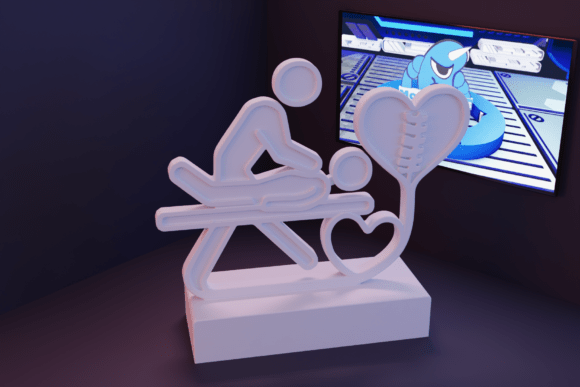
The landscape of healthcare education and patient communication is undergoing a quiet but profound transformation. For decades, the teaching of physiotherapy relied heavily on two-dimensional diagrams, expensive cadaver labs, or generic plastic skeletons that often failed to capture the nuance of human movement. Today, the integration of digital fabrication tools, specifically 3D printing, offers a strategic advantage for clinics, educational institutions, and private practices. By leveraging high-quality STL files—such as those representing iconic physiotherapy elements—professionals can bridge the gap between abstract anatomical theory and tangible, practical understanding.
This shift is not merely about adopting new technology; it is about enhancing decision-making, improving patient outcomes, and optimizing operational efficiency. When used intentionally, 3D printed models serve as powerful catalysts for learning, branding, and clinical clarity. However, like any tool, their value is determined by the strategy behind their deployment. This article explores how physiotherapy professionals and educators can harness these digital assets to achieve better long-term results.
Redefining Patient Communication and Trust
In a clinical setting, the primary challenge is often not the diagnosis itself, but the communication of that diagnosis to the patient. Physiotherapy relies heavily on patient compliance and understanding of biomechanics. When a practitioner explains a complex joint mechanism or a muscle imbalance using only verbal descriptions or flat images, there is a significant risk of misinterpretation. This is where physical models derived from precise STL files become invaluable.
Holding a three-dimensional representation of a knee joint, a spinal segment, or a specific therapeutic tool allows patients to visualize their condition. This tactile experience fosters a deeper cognitive connection. From a strategic perspective, this enhances the customer experience. Patients who understand their treatment plan are more likely to adhere to home exercise programs, leading to faster recovery times and higher satisfaction rates. Consequently, this builds trust and strengthens the professional reputation of the clinic.
Consider the difference between showing a patient a diagram of a rotator cuff tear versus handing them a 3D printed model that demonstrates the range of motion and the point of impingement. The latter transforms the consultation from a passive lecture into an interactive dialogue. This level of engagement differentiates a modern, forward-thinking practice from traditional competitors, serving as a subtle yet powerful branding element.
Enhancing Educational Outcomes for Students and Professionals
For educators and students, the utility of 3D printed physiotherapy models extends beyond simple visualization. It supports active learning methodologies. Traditional anatomy classes often struggle with the limitation of resources; not every student can have hands-on access to rare specimens or high-end simulation equipment. Digital models, however, can be replicated infinitely at a fraction of the cost.
By incorporating these models into curricula, educators can facilitate problem-based learning. Students can manipulate the models to understand leverage, force vectors, and joint kinematics in real-time. This practical application reinforces theoretical knowledge, leading to better retention and critical thinking skills. For continuing professional development, seasoned physiotherapists can use these models to refine their manual therapy techniques or to demonstrate new protocols to junior staff.
Furthermore, the availability of diverse STL files allows for customized learning scenarios. Educators can select models that highlight specific pathologies or anatomical variations, ensuring that students are exposed to a wide range of clinical presentations. This breadth of exposure is crucial for developing competent, adaptable practitioners who can handle complex cases with confidence.
Strategic Planning for Implementation
Adopting 3D printing technology requires careful planning. It is not enough to simply download an STL file and print it. To maximize return on investment, clinics and studios must approach this integration with a clear strategy. Here are key considerations for effective implementation:
- Define Your Objective: Are you using the models for patient education, student training, or marketing displays? Each goal requires different levels of detail, durability, and aesthetic finish. A model for a waiting room display may prioritize visual appeal, while a model for surgical planning requires extreme precision.
- Select High-Quality Sources: The quality of the printed object is directly dependent on the quality of the digital file. Ensure that your STL files are sourced from reputable designers or generated with high-fidelity AI algorithms. Poorly designed meshes can result in prints that are fragile or anatomically inaccurate, which can undermine credibility.
- Understand Technical Constraints: As noted in standard disclaimers, actual printed results vary based on printer type, material, and slicer settings. Some models may require support structures or specific orientations. Investing time in learning slicing software is essential to avoid wasted material and failed prints.
- Material Selection: Choose materials that align with your use case. PLA is cost-effective and easy to print for static displays. PETG or ABS offers greater durability for models that will be handled frequently. For flexible joints, TPU might be appropriate. Matching the material to the function ensures longevity and usability.
Risks of Unintentional Use
While the benefits are significant, there are risks associated with the casual or unplanned adoption of 3D printed models. One major pitfall is the potential for misinformation. If a model is anatomically incorrect due to a poor-quality STL file or improper printing settings, it can lead to confusion rather than clarity. In a clinical context, this could result in patients misunderstanding their condition, potentially leading to non-compliance or anxiety.
Another risk is resource misallocation. Purchasing expensive 3D printers and materials without a clear workflow or purpose can lead to wasted capital. Many clinics buy technology as a novelty, only to let it gather dust because it does not integrate seamlessly into their daily operations. To avoid this, start small. Test the waters with a few key models that address immediate pain points in your communication or teaching processes. Scale up only when you have established a consistent demand and workflow.
Additionally, there is the risk of over-reliance on technology. While models are excellent tools, they should complement, not replace, the human element of physiotherapy. The therapist’s expertise, empathy, and hands-on assessment remain paramount. The model is a aid to communication, not a substitute for professional judgment.
Long-Term Value and Brand Positioning
When integrated thoughtfully, 3D printed physiotherapy models contribute to long-term brand positioning. They signal to clients and partners that your practice is innovative, detail-oriented, and committed to excellence. In a crowded healthcare market, these differentiators matter. They can be leveraged in marketing materials, social media content, and community outreach programs to attract new patients and talent.
Moreover, the ability to customize models opens up opportunities for niche specialization. A clinic specializing in sports injuries, for example, can create a library of models specific to athletic movements and common injuries in various sports. This specialized knowledge base becomes a unique asset, reinforcing the clinic’s authority in that niche.
For entrepreneurs and small business owners in the health sector, this technology also offers scalability. Once a digital library of models is established, producing additional units is quick and cost-effective. This allows for easy expansion into new locations or the creation of product lines for sale to other professionals or students.
Practical Steps for Getting Started
If you are ready to explore the potential of 3D printing in your physiotherapy practice or educational setting, begin with these actionable steps:
- Audit Your Current Communication Gaps: Identify areas where patients or students consistently struggle to understand concepts. These are the ideal candidates for 3D model intervention.
- Source Reliable STL Files: Look for files specifically designed for physiotherapy. Ensure they are detailed and practical. Verify the source’s reputation and check user reviews if available.
- Invest in Basic Training: Learn the basics of 3D printing and slicing. Understand how orientation, infill, and support structures affect the final print. This knowledge is crucial for troubleshooting and quality control.
- Pilot and Iterate: Start with a small batch of prints. Gather feedback from users—whether they are patients, students, or colleagues. Use this feedback to refine your selection of models and printing parameters.
- Document and Share: Capture high-quality images and videos of your models in use. Share these on your professional platforms to demonstrate your innovative approach and educate your audience.
In conclusion, the integration of 3D printed models into physiotherapy is not just a technological upgrade; it is a strategic enhancement of practice capabilities. By focusing on clear goals, quality inputs, and intentional application, professionals can unlock significant value in education, patient care, and brand development. The key lies in moving beyond the novelty of the technology to embrace its potential as a fundamental tool for clearer communication and better health outcomes.